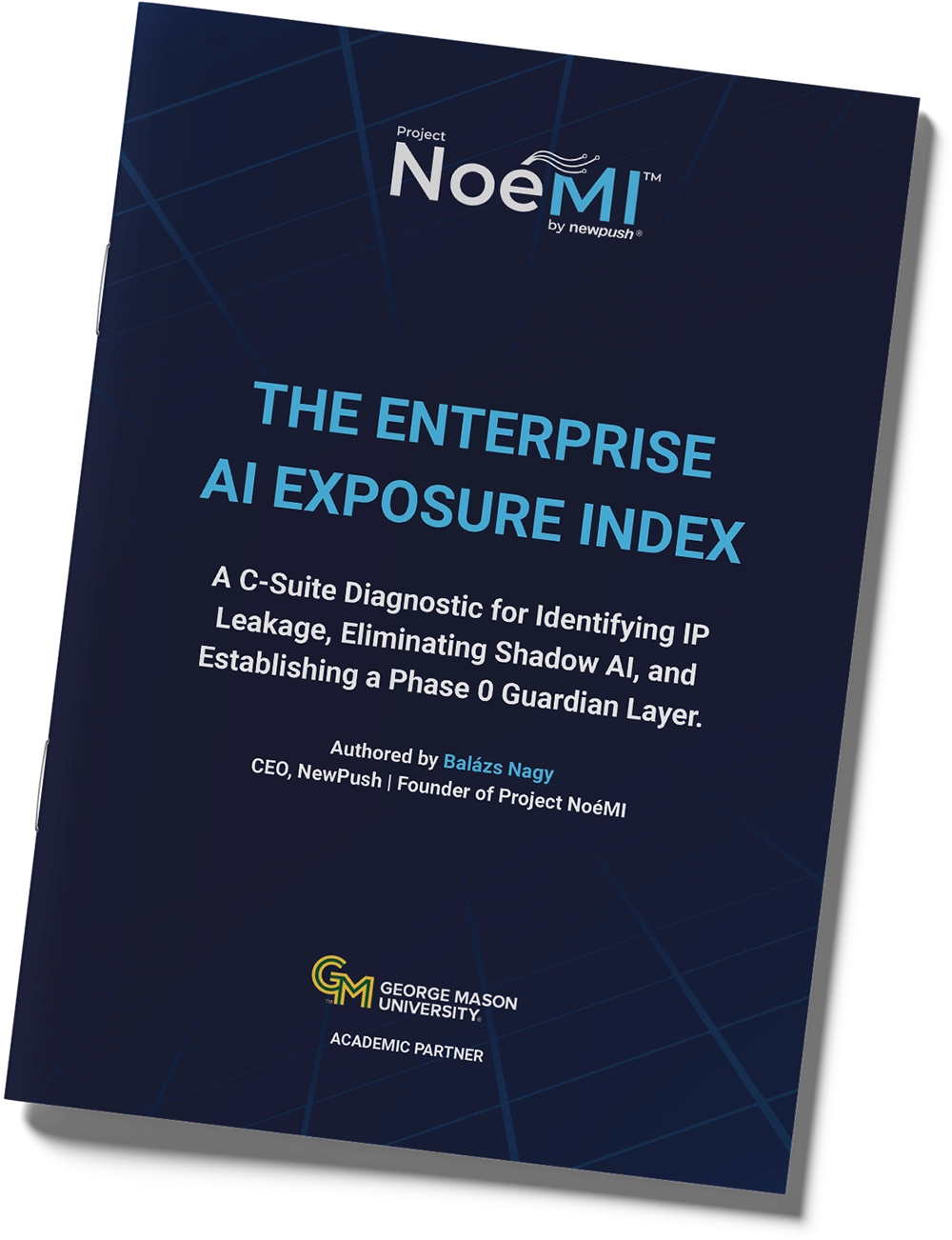
Loading...
Hands-on AI workshops for company teams
Build AI workflows your team can use
Start with administrative overhead. In NoéMI workshops, your people build with approved tools, test safeguards and measure real use—then progress toward innovation, sales and profitability.
Same Team
Exponential Output
THE ILLUSION
AI is not software. It is a restructuring.
Too many enterprise leaders treat AI as a blunt instrument to replace human labor or a simple SaaS tool to be integrated. This is a critical miscalculation.
THE LEAKAGE
The path of least resistance.
AI adoption begins with the work, the people and the data involved. Identify where AI is already used, what information it can access and which decisions require human oversight.
THE ARCHITECTURE
Stop hemorrhaging intellectual property.
Agree the data boundaries, approved tools and necessary remediation in Phase 0 before building. The workshops then bring problem owners, builders and governance leads together to test real workflows.
🛡️
Are You Operating in a Shadow AI Crisis?
Start AI Readiness →
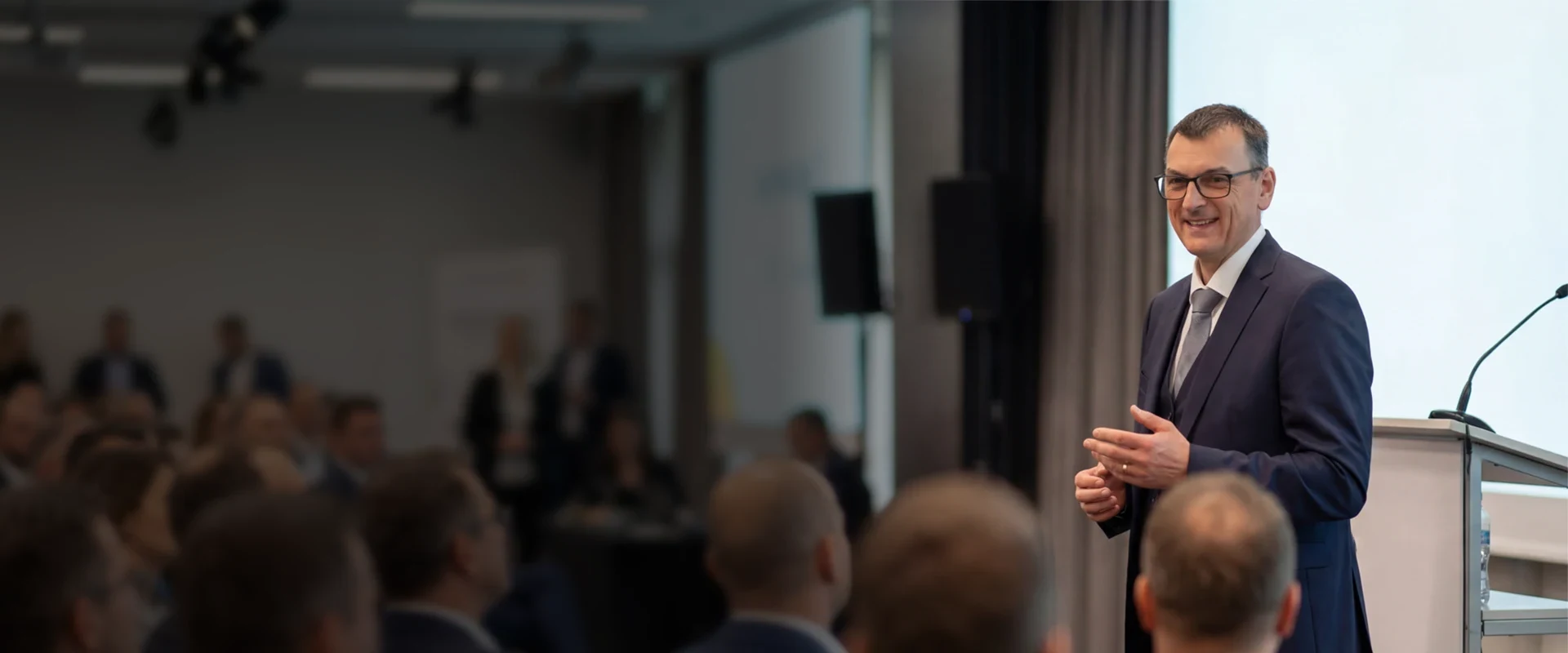
"Software doesn’t write the future, people do. Your true competitive edge lies in an empowered team, equipped to harness this technology for your company's advantage."
Balazs NagyCEO, NewPush | Founder of Project NoéMI
Measured, not promised.
From your first workflow to measured impact.
Start with a real task your team owns. Record the baseline, build within your approved perimeter, and measure the results from logged runs. The 40-hour workshop series is preferably delivered over five weeks, with five-day and ten-week formats also available.
Phase 0 | Before the workshops
A remote readiness assessment, readout, and remediation decision establish your security perimeter before the workshops begin. Phase 0 is a prerequisite, not a workshop week.
1
Week 1
Description | Define the task
We identify your most costly administrative bottlenecks and record how long each task takes today. Problem owners describe the work and agree the baseline with the builders.
2
Week 2
Delegation | Build the workflow
Problem owners and builders turn the task into a working agent, define what it may do, and log executions for review.
3
Week 3
Discernment | Test the safeguards
Teams test the Guardian Layer, review execution records, and challenge the workflow with red-team scenarios inside the established perimeter.
4
Week 4
Diligence | Review the evidence
Connect the workflow to approved company systems and review logged results against the baseline. Keep gross cost avoidance separate from net ROI and record the costs.
5
Week 5
Capstone | Launch and hand over
Complete the live deployment, security audit, and governance handover. Teams demonstrate what they built and retain a record of safeguards and measured results.
Open Framework · Transparent by Design
The agentic heart of every workshop
NoéMI workshops are not built on black-box AI. They are built on NoéMI Agents — an open, auditable agentic framework — and grounded in the NoéMI Bible, our public project reference. When AI systems govern work, transparent code is not a nice-to-have; it is how organizations earn trust, pass audits, and improve together.
Audit what the AI does
Opaque models hide decisions. Open agent definitions, skills, and protocols let leaders, security teams, and auditors inspect how work is planned, delegated, and verified — before production.
Trust requires inspectability
Enterprise AI fails when nobody can explain a workflow. Transparent frameworks turn AI from a vendor black box into architecture your organization owns, reviews, and governs.
Improve in the open
Skills, agents, and examples evolve as public artifacts. Teams learn by reading real implementations — the same materials used in NoéMI workshops — instead of re-inventing prompts in private silos.
NoéMI Agents — live repository KPIs
As of Oct 30, 2026 (UTC) from project-noemi/agents. Counts refresh from the public monorepo (cached up to 24h).
Skills
20
Agents
12
Examples
10
MCP protocols
18
Collaborators
22
Stars
14
Forks
35
Templates
5
The NoéMI Bible
Our public project reference: philosophy, the 4 Ds of AI Fluency, Phase 0 security, and the path from flood to architecture. Start here to understand why the program exists.
Read the Project ReferenceNoéMI Agents
The open agentic framework at the heart of the workshops — skills, agents, examples, MCP protocols, and operating profiles you can inspect, fork, and improve.
Explore the FrameworkSTART HERE
Are You Operating in a Shadow AI Crisis?
You cannot patch massive operational vulnerabilities with a company-wide memo. Begin with the AI Readiness assessment — the first step for every NoéMI cohort.
Start AI Readiness →